Detroit refrigerator repair: common issues in older homes
Older Detroit homes put unique stress on refrigerators - sagging floors, two-wire outlets, and voltage drops. Here's what fails first and what repair costs in 2026.
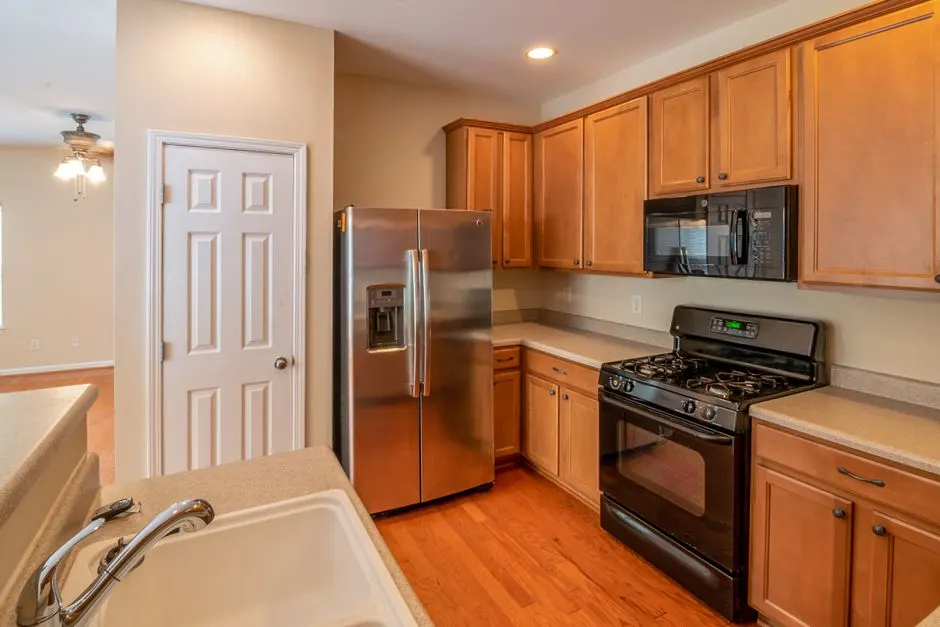
The most common refrigerator problems in older Detroit homes are sagging floors that throw the compressor off level, two-wire ungrounded outlets that trip GFCI breakers, clogged condenser coils packed with decades of dust, and voltage drops on knob-and-tube or early 60-amp service. These aren't fridge defects - they're house defects that show up in the fridge first.
Detroit refrigerator repair common issues in older homes is a category of service that addresses appliance failures caused by the building itself, not just the appliance. If your fridge is running warm, short-cycling, or leaking in a 1920s bungalow or a 1950s brick ranch, the fix usually starts at the wall, not the compressor. Below we break down what fails, what it costs in 2026, and when to stop troubleshooting and call us.
Why older Detroit homes cause refrigerator problems
Detroit's housing stock is old - roughly half the city's single-family homes were built before 1950, and many neighborhoods on the east and west sides still run original wiring and plumbing. A refrigerator pulls 6 to 12 amps at startup, and it does that dozens of times a day. In a house wired for a 1940s icebox and a radio, that load exposes every weak point.
Three building-level factors drive most of the calls we run:
- Floor slope. Settled joists and old pier-and-beam foundations tilt a fridge 1 to 3 degrees. That's enough to keep the door from sealing, pool defrost water under the crisper, and starve the compressor of oil return.
- Two-wire outlets. Pre-1960 homes often have no equipment ground. Modern fridges with inverter boards and variable-speed compressors are sensitive to that. We see control boards fail at roughly twice the rate in ungrounded kitchens.
- Voltage drop. Long runs of 14-gauge wire on a shared kitchen circuit sag to 108-112 volts under compressor load. Below 108V, the compressor overheats and the overload trips.
None of that is exotic. It's Tuesday in Detroit. If you're dealing with any of it, our Refrigerator Repair Service in Michigan team handles the appliance side and can tell you when the house side needs an electrician.
The five failures we see most in Detroit's older housing stock
These five account for the majority of older home fridge repair Detroit calls we run between October and March, when kitchens swing between 60°F and 75°F and compressors work hardest.
1. Compressor overload from low voltage
The compressor tries to start, hums for 3 to 8 seconds, clicks off, and repeats. That click is the overload protector. In a newer home it usually means a bad start relay. In a Detroit home built before 1960, it more often means the circuit can't hold voltage under load. We meter the outlet under load before we touch the fridge.
2. Door gaskets that stopped sealing years ago
A gasket that's 8 to 12 years old hardens and takes a set. On a sloped floor, the door never fully closes on its own. You get frost in the freezer, condensation in the fresh-food section, and a compressor that runs 20 hours a day instead of 8.
3. Condenser coils packed with dust and pet hair
Coils under or behind the fridge need cleaning every 6 to 12 months. In older homes with forced-air heat, we pull a mat of dust, lint, and hair off coils that haven't been touched in a decade. That alone can add 15°F to the condensing temperature and cut cooling capacity.
4. Defrost drain lines frozen or clogged
Water on the floor under the crisper drawers is almost always a blocked defrost drain. In older kitchens with unheated crawl spaces below, the drain line can freeze in January and back up into the fridge.
5. Control board and thermistor failures
Modern inverter fridges on old wiring eat control boards. We replace them, but we also test the outlet and recommend a dedicated 20-amp circuit when the readings justify it.
If your unit is a French-door or side-by-side model, the failure pattern shifts - those have dual evaporators and ice makers that add their own failure points. We cover that in more depth on our French Door Refrigerator Repair in Michigan page.
What are common refrigerator issues in older Detroit homes?
The most common refrigerator issues in older Detroit homes are warm fridge temperatures, frost buildup, water on the floor, compressor short-cycling, and ice makers that quit - and in pre-1950 houses, all five usually trace back to floor slope, ungrounded outlets, or a shared kitchen circuit.
Here's how that plays out by neighborhood. In Refrigerator Repair Service in Detroit proper, we work in a lot of 1920s-1940s bungalows in Bagley, Fitzgerald, and Morningside where the kitchen was added on and the fridge sits on a rear addition with its own slope. In Refrigerator Repair Service in Dearborn, the 1940s brick ranches off Schaefer and Telegraph have tighter kitchens and less airflow around the fridge, so coils clog faster. Same appliance, different failure timeline.
What we check on every older-home call, in order:
- Outlet voltage under load (should hold 115-120V with the compressor running)
- Level front-to-back and side-to-side (we shim to within 1/4 inch)
- Door gasket seal - dollar-bill test at four points per door
- Condenser coil condition and clearance (2 inches minimum at the back)
- Defrost drain flow and heater operation
- Thermistor resistance against spec
How much does refrigerator repair cost in Detroit?
Typical 2026 refrigerator repair pricing in the Detroit area runs $180 to $320 for a diagnostic plus a common repair, $350 to $650 when a control board or sealed-system part is involved, and $75 to $120 for a diagnostic visit that we credit toward the repair.
Real ranges we quote:
- Door gasket replacement: $150-$280 parts and labor
- Defrost drain clearing: $120-$200
- Condenser coil cleaning: $95-$160 (often bundled with a repair)
- Start relay and overload: $160-$260
- Control board: $320-$600 depending on model
- Compressor replacement: $550-$950, and we'll tell you honestly when a 15-year-old fridge isn't worth it
Two things move the number more than anything else: whether the fridge is built-in or counter-depth (tighter tolerances, longer labor) and whether the kitchen circuit needs work. We don't do electrical, but we'll tell you when the outlet is the problem so you're not paying us twice. Our fridge repair Michigan crews carry the common relays, gaskets, and thermistors on the truck, so most repairs finish in one visit.
Common mistakes Detroit homeowners make with older fridges
The most expensive mistake is replacing a working fridge because of a $150 gasket or a clogged drain. We've pulled perfectly good 8-year-old units to the curb over a $40 part.
Other ones we see weekly:
- Shoving the fridge tight to the wall. Older kitchens are narrow. If there's no airflow behind the unit, the compressor runs hot and dies young. Leave 2 inches.
- Running a fridge and a microwave or space heater on the same circuit. In a pre-1960 kitchen, that's a guaranteed voltage sag.
- Ignoring a slow leak. Water under the crisper means a blocked drain. Left alone, it rusts the cabinet floor and grows mold.
- Using an extension cord. Never. A fridge needs a dedicated outlet.
- Turning the thermostat to the coldest setting to "fix" warm temps. That masks the problem and freezes the coils solid.
If you've already tried the thermostat trick and the fridge is still warm, stop. You're burning compressor life.
When to call a professional
Call us when the fridge is warm for more than 24 hours, when you hear the compressor clicking on and off every few minutes, when there's water on the floor, or when the freezer works but the fridge section doesn't. Those four symptoms cover about 80% of the repairs we run.
Fridge Repair Michigan works across metro Detroit and the surrounding counties. We diagnose, we quote before we start, and we carry the parts to finish most jobs same-day. If the honest answer is "this fridge is done," we'll say so and you won't pay for a repair that won't hold.
Frequently Asked Questions
What are common refrigerator issues in older Detroit homes?
Warm fridge temps, frost buildup, water on the floor, compressor short-cycling, and dead ice makers. In pre-1950 homes, most trace back to sloped floors, ungrounded two-wire outlets, or a shared kitchen circuit that sags below 108 volts under load.
Who repairs refrigerators in Detroit Michigan?
Fridge Repair Michigan services Detroit and the surrounding metro, including Dearborn, Warren, Livonia, and Sterling Heights. We handle all major brands and configurations, carry common parts on the truck, and quote the repair before we start work.
How much does refrigerator repair cost in Detroit?
Most repairs run $180-$320 including the diagnostic. Control board or sealed-system work runs $350-$650. Diagnostic visits are $75-$120 and credited toward the repair. Compressor replacement is $550-$950, and we'll tell you when a fridge isn't worth fixing.
Why does my fridge run constantly in an older Detroit home?
A fridge runs constantly when it can't shed heat or can't seal. Check the condenser coils and the door gasket first. If both are clean and sealing, the issue is usually low voltage or a failing thermistor - both need a meter to confirm.
Can I put a modern refrigerator on old wiring?
Usually yes, but not always safely. If the kitchen circuit is shared or the outlet reads below 115 volts under load, the compressor and control board will fail early. We test the outlet on every older-home call and tell you when an electrician should look at it first.
Get help with Refrigerator Repair Service in Detroit
If your fridge is warm, leaking, or clicking, we can be out to diagnose it and give you a straight answer on repair versus replace. Call Fridge Repair Michigan at 1112223333 and we'll get your kitchen back to normal.